
Evolution of V2G: CPOs-Automotive OEMs-Utilities at the center of transition
About the Whitepaper
V2G technology, despite being in its early stage, is expected to alter not only the electric vehicle (EV) market, but the entire electricity market as well. So far, one of the biggest hurdles to V2G adoption has been a lack of V2G standard. However, with CharIN promising a new standard in 2025 and Automotive OEMs joining NACS (North America Charging Standard) in the USA, the landscape of V2G is going to drastically change very soon.
In this whitepaper, we take a deeper look at the possible use-cases leading to new revenue streams from V2G, key stakeholders (Automotive OEMs, Utilities, CPOs) trying to get a share of that revenue, and several simulated scenarios where one of them potentially leads the V2G space and can capture majority of this opportunity. The sections of the whitepaper include:
Overview of V2G Technology Today
- Growth of DC EV Chargers Globally
- Emergence of V2G as a Technology
- Regulations Enabling V2G Integration
Use-Cases of V2G and Their Importance
- Renewable Curtailment Reduction
- Capacity Firming
- Frequency Regulation
- Congestion Management
Key Stakeholders in the V2G Space
- CPOs/MSPs
- Utilities
- Automotive OEMs
Simulation Scenarios – Looking Ahead
- CPOs manage V2G as the sole aggregator
- Automotive OEMs control user’s V2G experience as an aggregator
- Utilities acting as a sole aggregator controling the V2G evolution
Related Articles
EV Uptake in Eastern Europe Lagging Behind the Rest of the Continent
• While it is true that many targets and policies supporting the transition away from ICEs are coming out of Europe, the rate of electrification is certainly not homogenous across Europe, with Eastern Europe lagging behind.• An opportunity to accelerate EV adoption in...

Asia Pacific Betting on Fuel Cell Electric Vehicles to Tackle Climate Concerns
• Fuel cell electric vehicles are much more efficient than internal combustion engine vehicles and are powered by hydrogen or methanol in some cases.• Japan has the world’s largest hydrogen refueling network, accounting for more than 154 refueling stations as of last...
Latin America’s Push for eMobility: Policies Accelerating the Market
Still in the early stages of adopting the technology, Latin American countries are progressively increasing the number of privately owned electric cars (EVs) on the roads. With incentives and an expanding network of charging infrastructure, the region hopes to...
Related Articles
The Price of Electrification – Analyzing Global Fuel Costs and EV Adoption
• The global market is observing an inflationary trend which is a direct consequence of spike in energy costs and disruptions in the supply chain. • The initial investment in BEVs is almost 3 times more than what is required to acquire an ICE vehicle. • Battery...

Germany’s EVSE Market is in Full Momentum
According to Power Technology Research, the annual market share of Germany’s EVSE market is USD 219 million and is expected to grow with a CAGR of 21% from 2020-2026. Transportation constitutes 24% of the total emissions in Europe, the electrification of which will...
Is Wireless EV Charging the Future?
Wireless Charging is still in a budding phase; however, in the long run the EV charging industry will certainly be on an outlook for new innovative approaches to counter the challenges that will arise with EV charging at higher utilization across the globe. Countries...
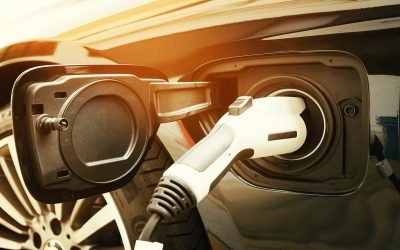
EVSE Companies Going Public in a Quest for Greater Market Share
Germany has a set target of 1 million public chargers by 2030. France has set a target of 100,000 public chargers by the end of 2021. Meanwhile, the US has set a target of 500,000 public chargers by 2030. To meet these targets, sizable investments are required and,...